Our Story
From a small gathering to a thriving community, Malvern Bible Chapel’s journey is one of faith and fellowship.
Since 1957
Malvern Bible Chapel began in 1957 when a small group of Christians from churches in Philadelphia and the surrounding suburbs felt led to start a new work in the Malvern and Paoli area. Their vision was simple—to create a place where people could gather to worship God, study the Bible, and grow together in faith.
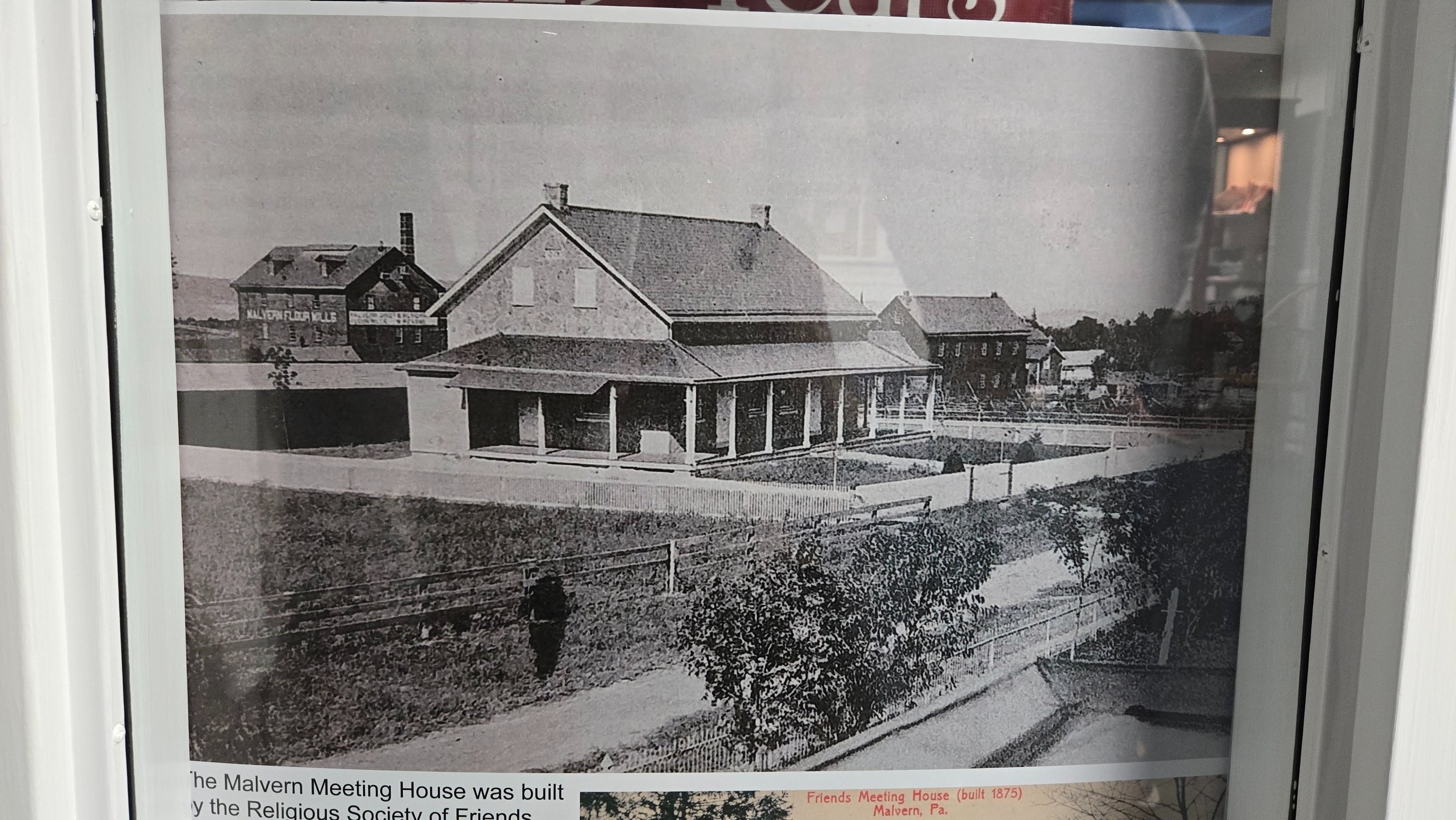
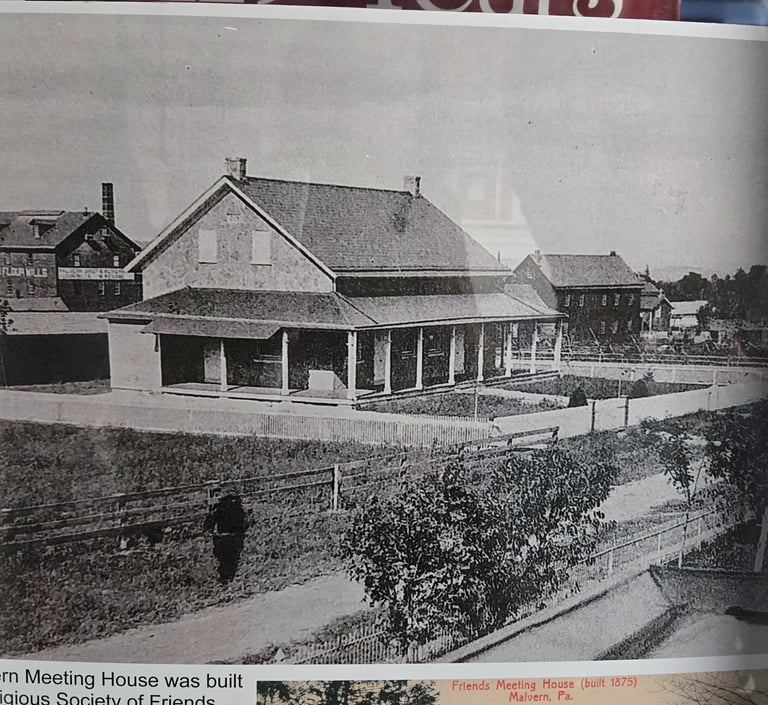
The idea first took shape on April 20, 1957, when eleven men met in Devon, Pennsylvania to pray and discuss starting a church. Shortly afterward, they purchased the unused Malvern Friends Meeting House, placing a $750 down payment and mortgaging the remaining $7,500. The building, originally constructed in 1879, still forms the main part of the chapel today.
The church was first known as Upper Main Line Gospel Hall, and the first public meeting was likely held on July 7, 1957. In 1964, the church was incorporated as Malvern Gospel Hall, and in 1984 the name was officially changed to Malvern Bible Chapel.
Through the decades, the building has been renovated and the bylaws updated, but the mission has remained the same—to be a Christ-centered community devoted to worship, prayer, Bible teaching, and sharing the gospel.
Today, Malvern Bible Chapel continues that same vision that began nearly seven decades ago: gathering people together to grow in faith and serve the community with the love of Christ.
Who We Are
Malvern Bible Chapel considers itself a non-denominational or inter-denominational assembly of believers with roots in the Plymouth Brethren movement. We meet weekly to remember Jesus Christ's work on the cross by breaking bread together and for a time of praise and preaching ministry. We sometimes also describe ourselves as a New Testament church, meaning that we operate on principles found in the New Testament.
What We Believe
New Testament Principles
We believe in the Scriptures of the Old and New Testament as inspired by God and inerrant in the original writings and that they are the supreme and final authority in faith and life.
We believe in one God, eternally existing in three persons: Father, Son, and Holy Spirit.
We believe that Jesus Christ was conceived by the Holy Spirit and born of a virgin and is true God and true man, sinless and perfect.
We believe that man was created in the image of God; that man sinned and thereby incurred not only physical death but also spiritual death which is separation from God; and that all human beings are born with a sinful nature and are sinners in thought, word, and deed.
We believe that the Lord Jesus Christ died for our sins, according to the Scriptures, as the representative and substitutionary sacrifice, and that all who believe in Him are justified by virtue of His shed blood.
We believe in the resurrection of the crucified body of our Lord, in His ascension into heaven and His enthronement at the right hand of God the Father where He ministers for us as High Priest, Advocate, and Head of the Church.
We believe in that “blessed hope”—the personal and victorious return of our Lord and Savior, Jesus Christ.
We believe that all who receive the Lord Jesus Christ by repentance and faith are born again of the Holy Spirit and become children of God.
We believe in the bodily resurrection of the just and the unjust, the eternal blessedness of the saved and the eternal punishment of the lost.
This is What We Stand On
Baptism
Communion
Ministry in the Church
Responsibility of Believers
We believe that Christian baptism is an expression of a believer’s identification with Christ and a commitment to follow Him. Baptism is not a means of, nor an aid to salvation. Nor is it a prerequisite to fellowship at the Lord’s Table.
It is however, expected of all believers in obedience to our Lord. Our practice is to baptize by immersion, symbolizing the believer’s death and burial with Christ, and his being raised with Him to live a new life.
References: Colossians 2:12; Acts 8:12, 35-39; 16:31-33
We believe that the celebration of the Lord’s Supper is the privilege and responsibility of all believers. No person who gives a credible confession of faith is to be refused participation in the communion of our Lord, unless that person is willfully engaging in sin, persists in disseminating false doctrine or creating schism, or is being disciplined by another church for such practices.
The observance of the Lord’s Supper does not require the presence or administration of a designated leader. Believers may exercise their common priesthood under the leadership of the Holy Spirit to remember and worship the Lord.
References: Matthew 26:26-29; Luke 22:15-20; Acts 2:42-46; 1 Corinthians 10:16-17: 1 Corinthians 11:23-24; 1 Peter 2:9
We believe that the teaching and pastoral ministry in the local congregation is not the duty or the responsibility of any one individual within the congregation.
The roles of evangelists, pastors, and teachers may be filled by elders or others who have gifts in these areas. Sharing of these responsibilities is intended to benefit the total ministry of the church by encouraging and facilitating development of these gifts.
We believe that the local church is to be guided and led by recognized elders who are responsible before God as shepherds of His flock. The elders are to share various responsibilities with other spiritual and capable men and women.
Women share with men in various spiritual ministries, an exception being the teaching of Scripture to the whole congregation, which is an exercise of authority.
References: Ephesians 4:11-13; 1 Timothy 2:11-14; 1 Corinthians 11:3-10, 14:34-35, Acts 14:23; 20:17,28 1 Timothy 3:1-7; Titus 1:5, 9; Philippians 1:1; Hebrews 13:17; 1 Peter 5:2-3; 1 Corinthians 12:4-11ians 11:23-24; 1 Peter 2:9
We believe that it is the responsibility of all Christians to love God and their neighbor, to worship God in spirit and in truth, to study the Scriptures, and to be faithful in prayer in order to glorify the Lord Jesus Christ in daily living.
We are to be filled with the Spirit, to share the Good News of salvation, and to encourage one another in the faith, as we look expectantly for the coming of our Lord.
References: Matthew 28:18-20; John 4:23-24; John 15:16-17; Acts 1:8; 1 Corinthians 10:31; Galatians 5:22-26; Ephesians 5:18-21, 2:10; Titus 2:11-15; Romans 12:1-2


